The Painful Language of Protest
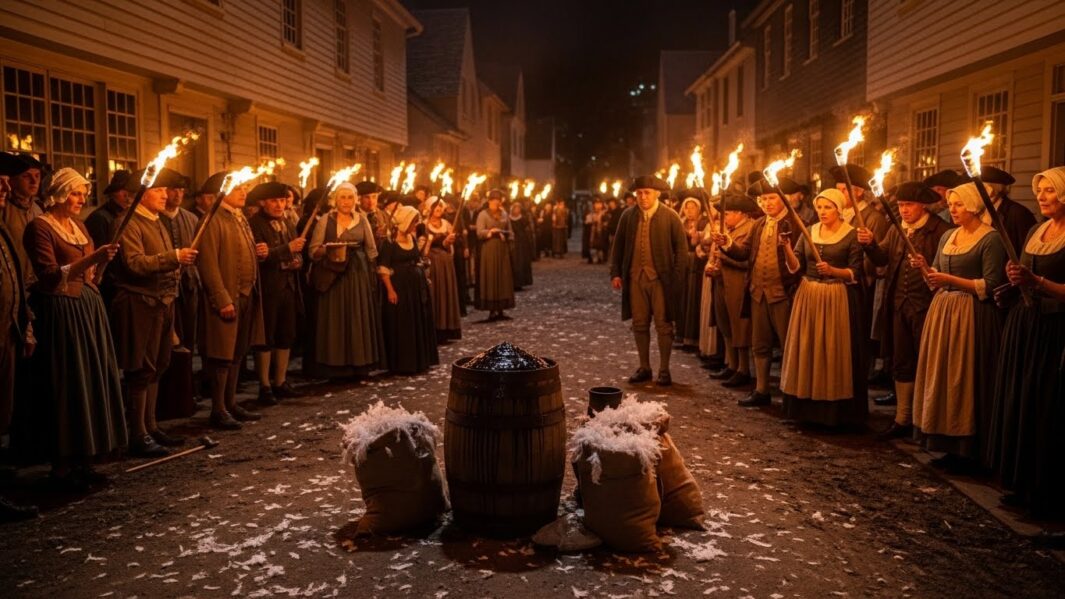
Tarring and feathering is one of the best known examples of how people shamed others publicly in the early modern period. Tarring and feathering is a unique combination of punishment, a symbol of the community’s anger towards someone who did not conform to what they believed should have happened and the formation of the crowd as a form of punishment. Tarring and feathering was a very specific method of punishment to physically cause pain as well as to cause emotional pain.
To fully understand what tarring and feathering represented, it is important to note that it was more than just an act of violence. Tarring and feathering was an event for all to see in the streets and town squares, a way to humiliate, intimidate, and mark the punished person as deserving of everyone’s hatred. Tarring and feathering was a way of expressing the community’s anger towards someone who did not conform to the values of that community and the community used this punishment, tarring and feathering, as a means to turn their anger into a painful punishment that would set things right.
Origins: A Medieval Tool of Marking and Humiliation
Tarring and feathering started way back in medieval Europe. People used hot tar to punish thieves, bad officials, and those who deserted. It was easy to do – all you needed was tar, feathers, rope, and a group of angry people ready to get even.
By the 1600s, the practice had spread to colonial ports and coastal towns. Sailors used it to make sure everyone followed their rules. It wasn’t always the same; sometimes they used just warm tar, other times really hot tar that could cause a lot of pain. But the point was always clear: the community had made a judgement, and everyone knew about the punishment.
Looking at the history of tarring and feathering, it seems like the goal wasn’t to kill someone, but to shame them. The person would live, but they’d have to live with the embarrassment for a long time after.
Tarring and Feathering in the American Revolution
The most famous stories of tarring and feathering come from the 1760s and 1770s when it became a political tool. When the British started taxing the colonies with the Stamp Act and Townshend Acts, the colonists revolted. People were ready to take justice into their own hands.
During the American Revolution, people who were loyal to the British, customs officials, and informants were often targeted. The Patriots used tarring and feathering to expose corruption, punish those who had betrayed them, and unite the community against what they saw as oppression. It was a symbolic act of revenge, showing the public’s anger with hot tar and public shaming.
The most famous case is probably the tarring and feathering of John Malcolm. He was a customs officer whose arrogance and threats made the locals so angry that they lost it. Malcolm was stripped naked, covered in hot tar, rolled in feathers, and marched through Boston. It was a public display of anger that was later used in revolutionary propaganda.
Through these punishments, the colonists made it clear that they rejected British rule. They also showed how easily protests could turn violent.
Was Tarring and Feathering Lethal?
It’s rare for tarring and feathering to be deadly, but whether it *could* kill someone is tricky. If the tar was just warm, it would burn and cause blisters. But if it was boiling hot – like they sometimes used way back when – it could lead to infections, shock, or really bad burns that could be fatal. A lot of people who went through this ended up with scars that lasted a long time, and lung problems too.
Even so, the point wasn’t really to kill people. The idea was to embarrass them big time. They wanted to mark the person – cover them in feathers and tar to turn them into a walking, talking symbol of shame. This punishment was all about getting everyone involved, strengthening the group by ruining one person’s reputation.
When Did Tarring and Feathering End?
As legal systems grew more formal, this practice faded away. Courts saw it as mob rule that was out of control, and with a growing focus on keeping order, these kinds of public punishments became unacceptable. In most Western countries, tarring and feathering had pretty much stopped by the late 1800s. But there were a few cases that popped up again during conflicts and when people took the law into their own hands in the 1900s.
Even so, the symbolism is still around. The image of someone covered in tar and feathers still makes you think of betrayal, shame, and the anger of a community – it’s like a leftover feeling from past rebellions.
The Ritual, the Crowd, and the Meaning of Pain
Basically, tarring and feathering was how people dealt with anger and what they thought was right. Back then, communities worked together, using pain to make sure everyone followed the rules and to show they wouldn’t back down. It was awful and embarrassing for whoever it happened to. But for the group, it showed they were united, warned others, and proved they could govern themselves.
This reminds us that public displays have always shaped how we keep order, from old-time punishments to when people took to the streets during revolutions. This kind of thing happened when law and anger mixed, when punishment turned into rebellion, and when people used someone’s body to show how mad they were.
Modern Reflections Through Museum Exhibits
Today, the story of tarring and feathering survives through artifacts, documents, and reconstructions. At the Medieval Torture Museum in Chicago, visitors explore how humiliation-based punishments shaped communities and rebellions. The Medieval Torture Museum in Los Angeles presents the ritual within a broader narrative of public punishment — examining how mobs used pain as a form of intimidation and moral signaling. At the Medieval Torture Museum in St Augustine, displays reveal how ritual punishments evolved, showing the connections between medieval justice and the violent theatrics of the American colonial period. For further historical reflections on punishment, revolt, and public humiliation, the museum’sblog offers deep dives into the psychology of justice and the cultural legacy of painful rituals.