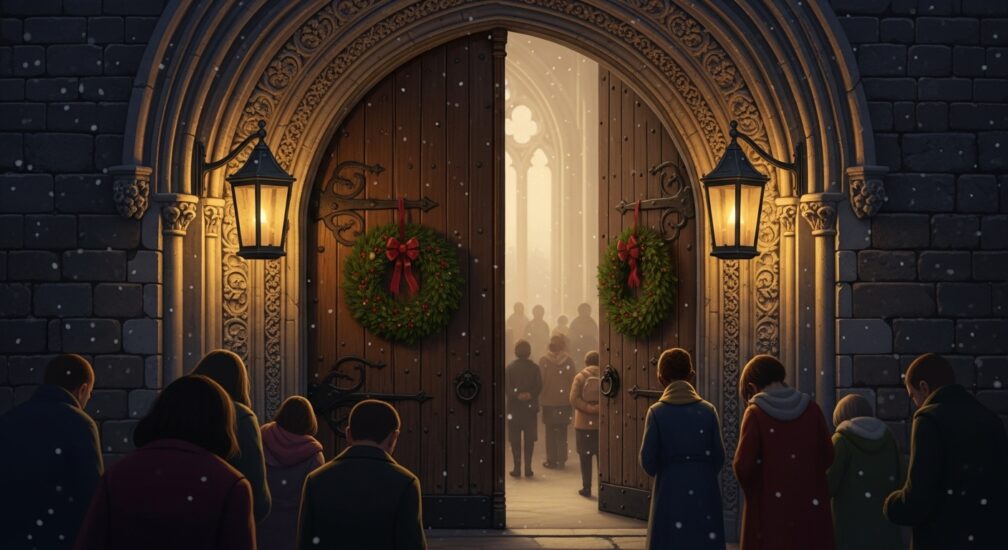
When winter settles over the city and snow begins to trace faint lines across rooftops, the world turns its gaze to Christmas in Chicago. Lights glitter across the Magnificent Mile, and carols echo between frozen streets. The scene radiates warmth and joy — yet beneath the festive spirit, another current runs quietly: introspection. December doesn’t just invite celebration; it also demands reflection. In the soft glow of candlelight, we ask ourselves the timeless question — how good was your year?
The Darker Side of Christmas: Not All That Glitters Is Gold
It’s easy to forget that the holiday season carries a double meaning. For many, it’s merry and bright — a season of generosity, kindness, and laughter. Yet, the darker side of Christmas reminds us that even the most radiant festivity is built on human contradiction.
As the year fades, we stand before our own private reckoning. The year end moral checklist appears not in paper form but within our conscience. Did we live with faith and charity? Did we show forgiveness? Or did we stumble through holiday sins — greed, pride, neglect disguised beneath ribbons and ornaments?
In a city like Chicago, where frost and warmth coexist, Christmas becomes both a spectacle and a mirror. Its beauty glimmers brightest when we admit that light only exists because darkness does too.
How Good Was Your Year? A Moral Mirror
Every December feels like a quiet trial — one not held in courtrooms but within the human heart. The closing of a year asks us to weigh our choices: the kindness given, the patience lost, the promises broken. How good was your year becomes not a question of success but of soul.
This is the essence of year end reflection — a ritual older than the holiday itself. In medieval times, people confessed their sins before the coming of the new year, believing that moral cleansing invited divine redemption. Modern life has traded confessional booths for social media and candlelit solitude, but the inner guilt remains the same.
To sit in silence at year’s end, watching the lights flicker through snow, is to take part in a centuries-old ritual of remembering and reconciling.
Holiday Sins and Virtues: The Irony of Celebration
The season of holiday sins is paradoxical. We speak of hope and forgiveness while indulging in excess — more gifts, more noise, more distraction. We call it festive while longing for peace.
It’s this irony that makes Christmas in Chicago so fascinating — a city where the abundance of decorations meets the quiet pull of self-awareness. Visitors seeking more than surface cheer often find depth in unusual places. One such place is the Medieval Torture Museum in Chicago, where the boundaries between judgment and mercy, guilt and grace, are laid bare.
Among the unique Christmas things to do, few are as thought-provoking. The museum’s immersive holiday experiences lead visitors through centuries of moral reflection — showing that the struggle between virtue and temptation is as old as humanity itself.
Here, redemption and remembrance coexist — much like Christmas itself, where laughter hides introspection and joy is often born from forgiveness.
The Ironic Christmas Reflection in Modern Times
Today, our ironic Christmas reflection has shifted from religious ceremony to personal philosophy. People light candles not just for prayer but for memory. They seek meaning beyond the miracle of gifts and gatherings.
A walk through a Chicago winter or a visit to the Medieval Torture Museum in Los Angeles can offer more than entertainment — it’s an encounter with the human story itself. Here, belief and introspection replace judgment, and every artifact whispers that morality has always been fragile, shifting, and deeply personal.
Further south, at the Medieval Torture Museum in St Augustine, visitors can explore how medieval ideas of justice shaped the way we still measure good and evil today. The exhibits evoke wonder and nostalgia — not for cruelty, but for the universal quest to understand the self.
A Season for Memory and Redemption
Christmas is a season of memory — each ornament, song, and smell carries a trace of the past. It’s also a season of redemption, an invitation to rebuild what was broken. Faith isn’t limited to belief in miracles; it’s the courage to forgive ourselves for the year’s holiday sins.
The museum’s blog continues this theme, reflecting on ritual, forgiveness, and conscience through history. Its stories remind us that every act of cruelty once justified by authority can now be reexamined through empathy and understanding.
This blend of darkness and light — of introspection and festivity — makes the season more than a celebration. It’s an emotional journey that links the modern world with the moral struggles of the past.
A Candle in the Frost
Perhaps the darker side of Christmas isn’t sinister at all — it’s simply honest. The holiday’s real beauty lies not in perfection but in hope. The candlelight that glows through the frost each December reminds us that compassion survives even in the coldest moments.
So before the new year begins, pause amid the carols and laughter. Write your own year end moral checklist. Forgive. Remember. Begin again.
And if your reflections lead you to the quiet halls of a museum this winter, know that within the shadows of history, the Medieval Torture Museum offers something rare — not fear, but understanding.
Because how good your year was is not a verdict, but an invitation: to see yourself clearly, to grow, and to carry light into another year of wonder.